Set up opening balances
If your business was trading before you started using SME Books, you need to bring in the balances you already had. Do this before recording new transactions.
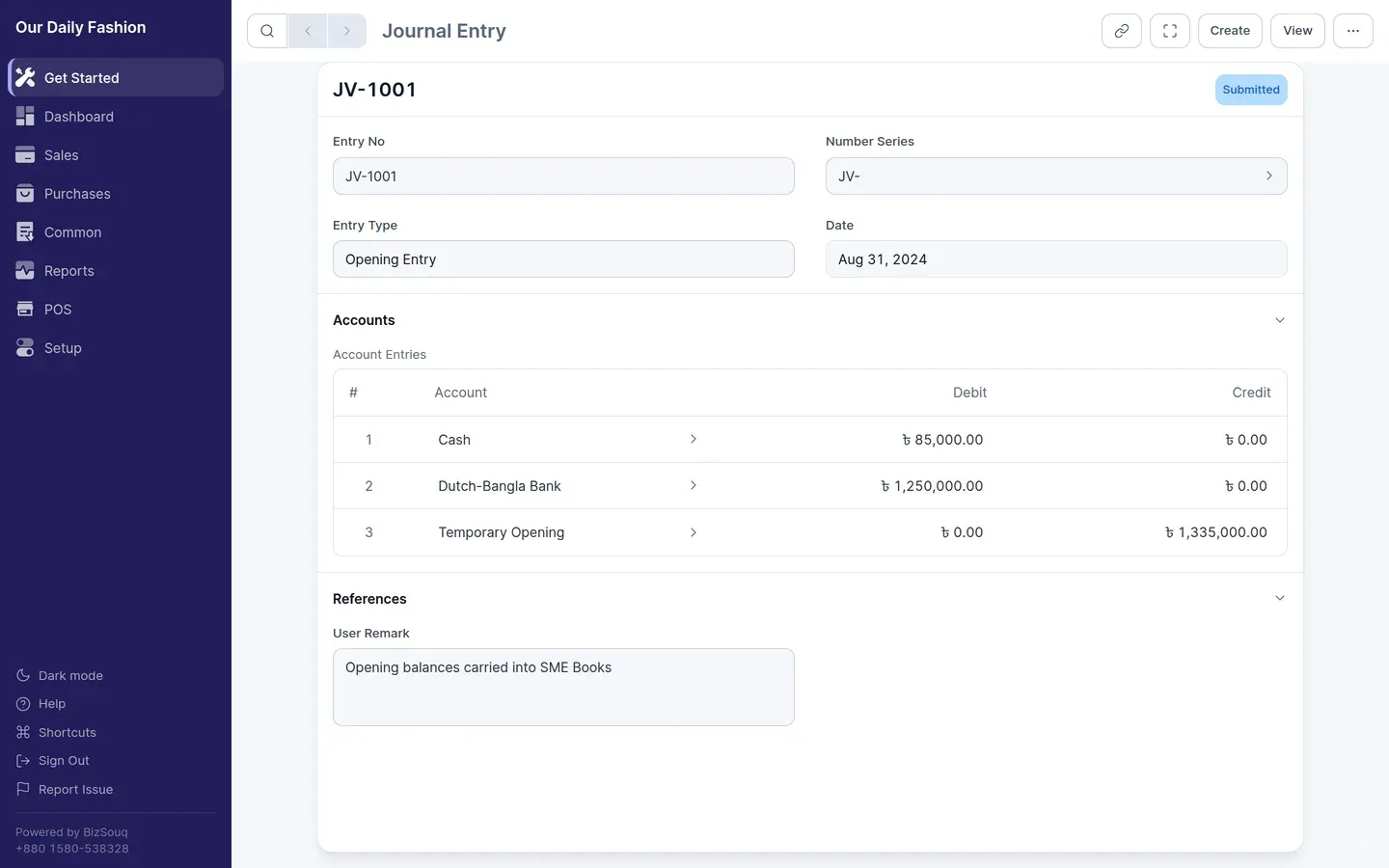
Temporary Opening
Section titled “Temporary Opening”The chart of accounts includes a Temporary Opening account under Temporary Accounts. It is the counter-entry for every opening balance: you debit or credit the real account and post the other side to Temporary Opening.
Recording the balances
Section titled “Recording the balances”Create a journal entry dated the day before your books start — typically the last day of your previous financial year.
For each account carrying a balance, add a row: debit for assets and expenses, credit for liabilities, equity and income. Post the balancing amount to Temporary Opening.
Common accounts to bring in:
- Bank and cash balances
- Outstanding customer invoices (Debtors)
- Unpaid supplier bills (Creditors)
- Stock on hand
- Fixed assets and their accumulated depreciation
- Loans outstanding
Checking your work
Section titled “Checking your work”Once posted, open the trial balance. Total debits must equal total credits. The Temporary Opening balance that remains represents your opening equity — if it is not what you expect, a balance has been missed or entered on the wrong side.