Balance Sheet
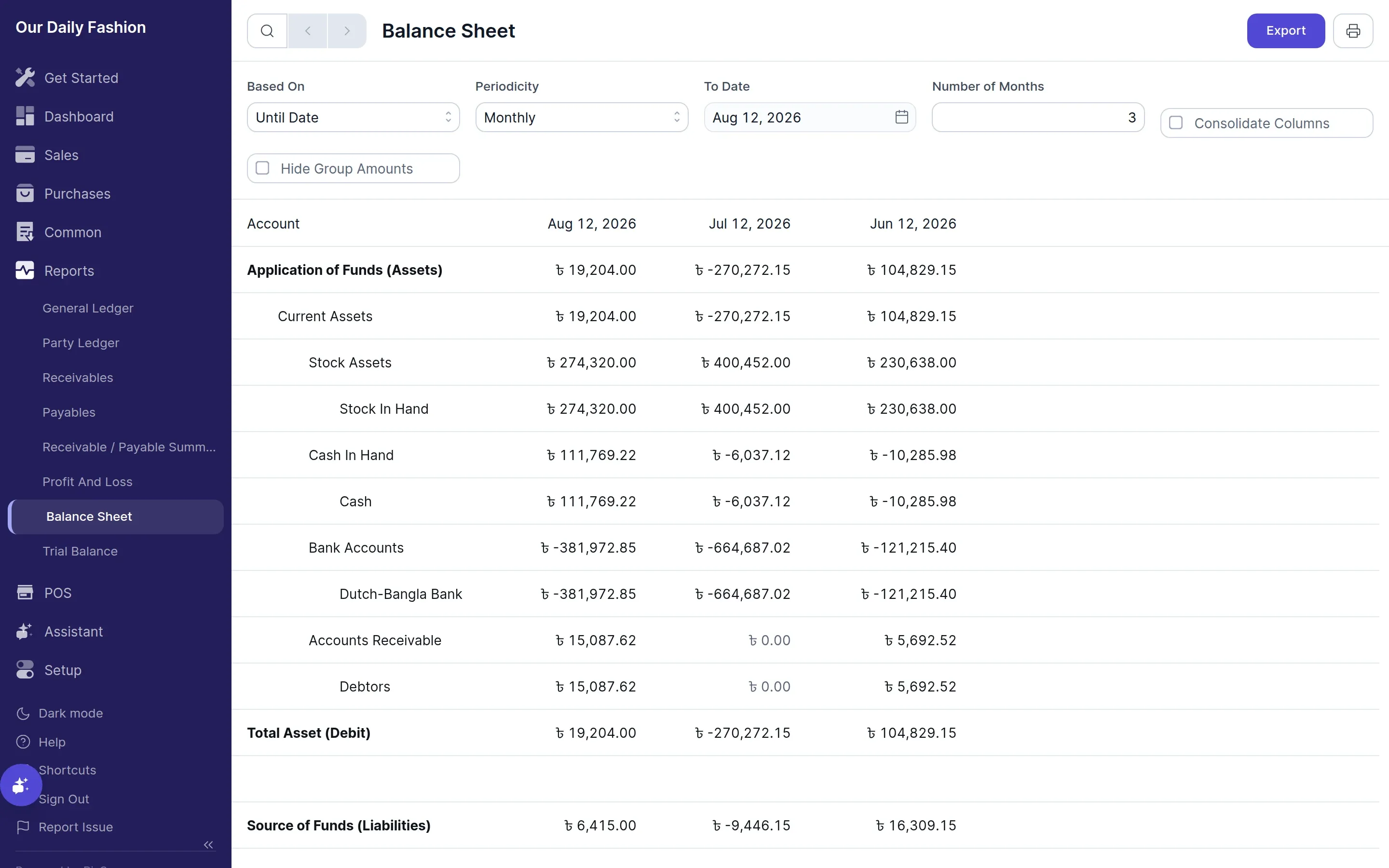
The balance sheet is a snapshot of what the business owns and owes on a given date. Unlike the profit and loss, which covers a period, the balance sheet is a position at one moment.
Structure
Section titled “Structure”Three sections, following the roots of your chart of accounts:
- Assets — cash, bank, receivables, stock, fixed assets
- Liabilities — payables, taxes due, loans
- Equity — capital, reserves and retained earnings
Assets must equal liabilities plus equity. If they do not, an entry is missing or unbalanced — check the trial balance first.
Columns
Section titled “Columns”Based On, Periodicity and the period count decide the columns, and each column covers the movement inside its own period rather than the balance carried forward into it. Three monthly columns therefore show what each of the last three months did, which is why a column can be negative where the underlying balance never is. For the position as at a date, use a single period long enough to reach back to your opening entry.
Retained earnings
Section titled “Retained earnings”Profit from closed periods accumulates into equity. This is why the balance sheet ties back to the profit and loss: the net profit for the year flows into the equity section.